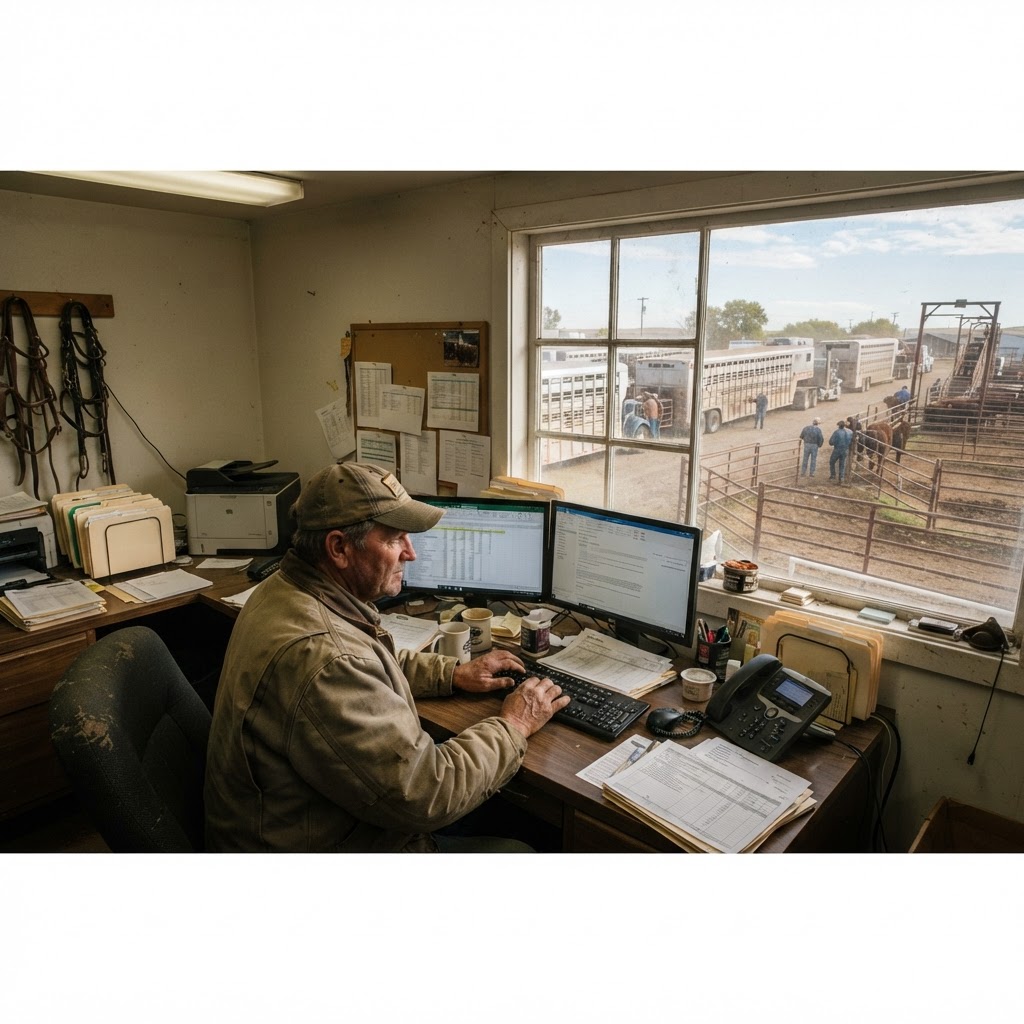
It is 9:40 on a Tuesday morning and the sale starts at 10. The phone in the office is ringing, a trucker needs a scale ticket, and somewhere in a stack of papers is a list of forty producers who said they wanted to know when the fall bred heifer sale would post. Nobody has time to open a browser tab, log into a separate email platform, build a template, and remember which list is current. So the email doesn't go out. It rarely does, not because barns don't understand the value of staying in front of buyers and consignors, but because the tool for doing it lives outside the actual workday.
That gap is where a lot of sale barns quietly lose repeat business. A buyer who bid on replacement females last spring and never heard from the barn again drifts to whoever does reach out. A consignor who had a good result gets courted by someone else's newsletter first. The barns that keep that relationship warm aren't necessarily the ones with the fanciest marketing. They're the ones whose email actually goes out, on time, to the right people, without requiring a second login and a second monthly invoice.
Do Sale Barns Need a Separate Email Marketing Tool?
Quick answer: No. A sale barn does not need a standalone email platform like a general-purpose marketing tool to run effective campaigns. What it needs is email built into the same system that already holds consignment records, buyer history, and sale details, so a sale announcement or reminder can be sent in minutes using data the office already has, with opens and clicks tracked automatically on each contact's record.
Why Email Still Works for Barns
Email still works because it is the one channel a producer or buyer actually checks on their own schedule, without an algorithm deciding whether they see it. A text can feel intrusive and a social post gets buried in an hour. An email announcing a special replacement female sale, sitting in an inbox with a subject line and a date, gets opened when someone has five minutes between chores. For sale barns specifically, email carries information that needs detail: sale date, run order, video links, health papers, terms. That's a lot to communicate well in a text message and almost impossible to do consistently through word of mouth alone.
The Cost of a Separate Tool
The real cost of a bolt-on email platform is not just the monthly fee, it is the duplicate work required to keep it useful. Most general email tools charge by list size or send volume, so costs climb as a barn's contact list grows, which is exactly when the tool is doing its job. Beyond the invoice, someone on staff has to export contacts from wherever consignment and buyer records actually live, clean that list, upload it into the separate platform, and repeat that process every time it goes stale. Consignor status changes, buyer contact info updates, and new leads from a sale rarely sync automatically between two disconnected systems. The result is a tool that costs money and still needs manual babysitting to stay accurate.
What Good Barn Email Actually Requires
Good barn email requires three things working together: reliable deliverability, real segmentation, and content built from information the office already has on file. Deliverability means the email actually lands in an inbox instead of a spam folder, which depends on sending from a properly authenticated domain rather than a personal or generic account. Segmentation means a bred heifer sale announcement goes to buyers who have bought females before, not to everyone who ever bid on anything at the barn. Content means the email pulls real sale details, consignment highlights, and photos or video rather than a generic "sale this week" message that could have come from anyone.
A short readiness check helps here. A barn's email is set up well if it can answer yes to each of these:
- Sends come from a verified barn domain, not a free personal email address.
- Contact lists split buyers and consignors by category, not one flat list for everyone.
- Templates pull in actual sale and consignment details instead of static boilerplate.
- Someone can see, per contact, whether a past email was opened or clicked.
That last point matters more than it sounds. Without it, a barn is guessing whether its marketing works at all.
The Automations That Run Themselves
The most useful barn emails are the ones nobody has to remember to send. A welcome note when a new buyer registers, a confirmation when a consignment is accepted, a reminder the week of the sale, and a thank-you or results follow-up afterward can all trigger automatically based on actions that already happen in the normal course of business. That turns email from a task added to an already full week into a background process that keeps working during the sale itself, while the ring is running and staff are anywhere but at a keyboard.
The Email Marketing Built Into the Platform
HerdStat includes email marketing as part of the same system that already tracks consignments, buyers, and sale details, so there is no second bill and no separate list to maintain. Because the email tools sit on top of the same contact card used for everything else, a staff member can open any producer's record and see their full history in one place: past consignments, website visits, internal notes, and yes, whether they opened or clicked the last email that went out. That combination, marketing activity next to consignment and buyer history, is what turns a routine sale announcement into a targeted message sent to exactly the right people, built from records the barn was already keeping.
Key Takeaways
Barns don't lose business because email doesn't work, they lose it because a disconnected tool makes email too much friction to send consistently. The fix is not a cheaper version of a separate platform, it is email built where the consignment and buyer data already lives, with automations that fire on their own and open and click history attached to the same contact card as everything else.
Frequently Asked Questions
Do I need a big contact list before email marketing is worth using?
No. Even a modest list of active buyers and repeat consignors benefits from consistent, well-timed sale announcements, and starting early with a small, accurate list builds a stronger foundation than waiting for it to grow first.
How do I know if my emails are actually landing in inboxes?
Domain authentication and consistent sending from a verified address are the biggest factors, and any platform worth using should show open and click data per contact so a barn can see, not guess, whether emails are being read.
What is the simplest first campaign for a barn that has never sent one?
A sale announcement to a segmented list, buyers who've bought that category before and consignors with a current listing, sent about a week ahead with real sale details and one clear call to action, is the easiest place to start.
Can email marketing replace social media promotion for a sale?
Not entirely. Email reaches people who already know the barn with detailed, time-sensitive information, while social posts extend reach to new audiences. The two work best together rather than as substitutes for each other.
Ready to send a sale announcement without opening a second platform or paying a second bill? Ask HerdStat for a walkthrough of the built-in email tools and see your contact history and campaign data on one card, side by side.